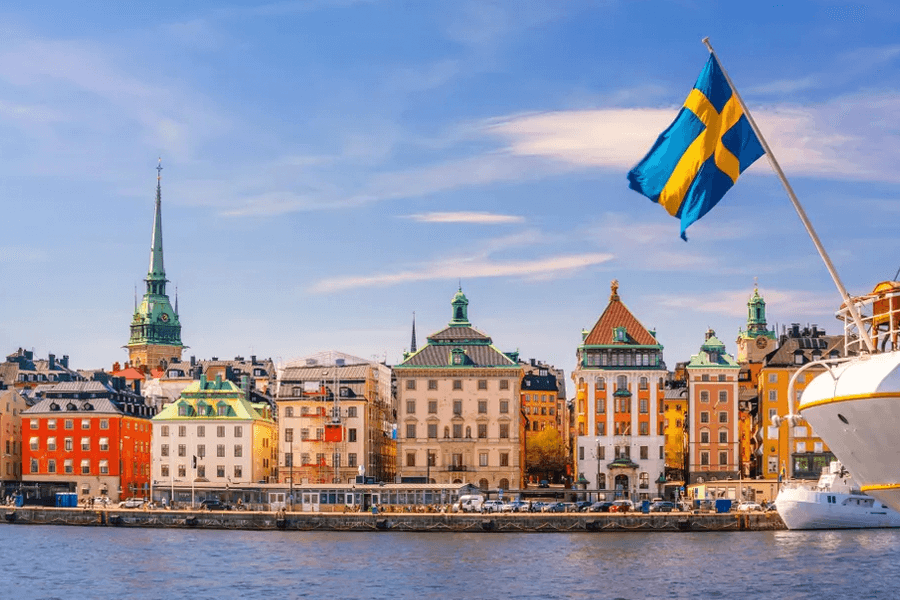
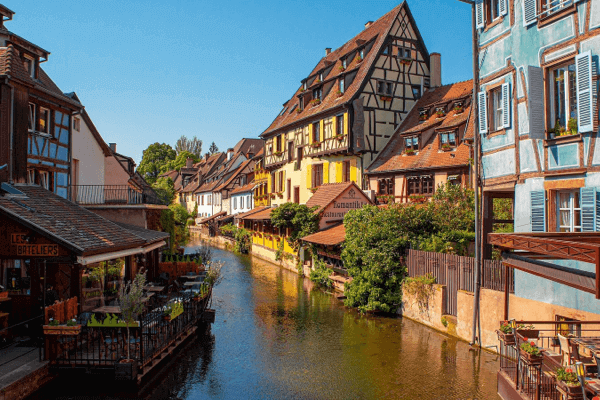
Europe is one of the seven continents in the world. It is located in the northwest of the Eastern Hemisphere, bordering the Arctic Ocean to the north, the Atlantic Ocean to the west, and the Mediterranean Sea and the Black Sea to the south. Europe has a total area of about 10.16 million square kilometers, making it the sixth largest continent in the world. Europe has a high population density of about 70 people per square kilometer, making it the third most populous continent after Asia and Africa. The population structure of Europe is relatively homogeneous, with more than 99% of people being white. Europe is not only one of the continents with a higher standard of living and human development index in the world, but is also considered one of the most suitable regions for human habitation.
Geographically, Europe is bounded by the Ural Mountains and the Ural River in the east, the Caspian Sea, the Greater Caucasus Mountains and the Black Sea in the southeast, and Asia in the west across the Atlantic Ocean, the Greenland Sea and the Denmark Strait. It faces North America in the north, the Mediterranean Sea in the south, and Africa in the south, with the Strait of Gibraltar as the boundary. The northernmost point of Europe is the Nordkine Peninsula in Norway, the southernmost point is Cape Marroqui in Spain, and the westernmost point is Cape Roca in Portugal.
Europe is the birthplace of the European Union, which, as a political and economic union, has greatly promoted cooperation and development among European countries. Economically, Europe has many highly developed industrialized countries, such as Germany, France, and the United Kingdom, which are leading in technology, education, industry, and services. Culturally, Europe has a rich historical and cultural heritage. From the philosophy and art of ancient Greece to the literature and art of the Renaissance, to modern music and film, European culture has had a profound impact on the world.



 Search