 Search
- # Arc de Triomphe
- The Arc de Triomphe of France: A Symbol of Glory and Grandeur
- Dec,08,2025
The Arc de Triomphe, also known as the "Triumphal Arch," is one of France's most famous landmarks and an iconic symbol of the nation's power. It stands in the heart of Paris, at the center of the Place Charles de Gaulle, on the famous Avenue des Champs-Élysées. The monument was built to honor the French military victories and commemorate those who fought and died during the French Revolutionary and Napoleonic Wars. This monumental arch has become a proud symbol of France’s history, victory, and the enduring spirit of its people.
The construction of the Arc de Triomphe was commissioned by Napoleon Bonaparte in 1806 after his victory at the Battle of Austerlitz. He wanted to create a symbol of his power and celebrate the French army’s triumphs. The design of the arch was inspired by ancient Roman architecture, specifically the Arch of Titus. It was designed by Jean Chalgrin and later modified by other architects, including Jean-Nicolas Huyot and Louis-Robert Goust. The Arc de Triomphe stands at 50 meters (164 feet) tall, 45 meters (148 feet) wide, and 22 meters (72 feet) deep, making it one of the largest triumphal arches in the world.
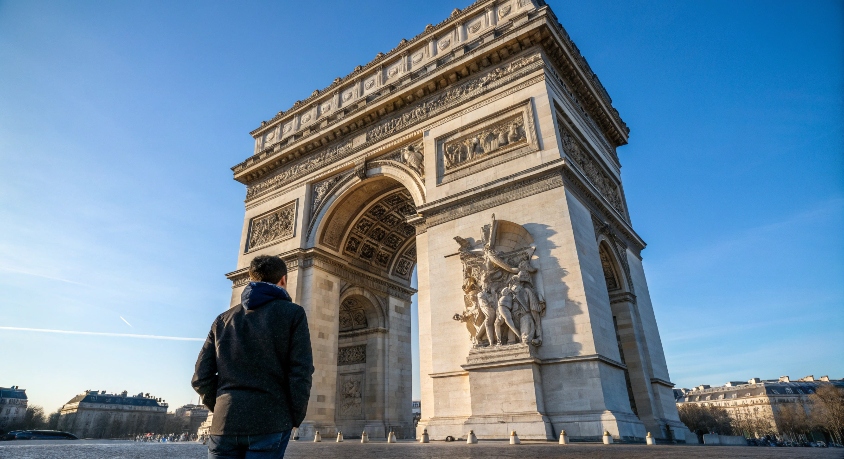
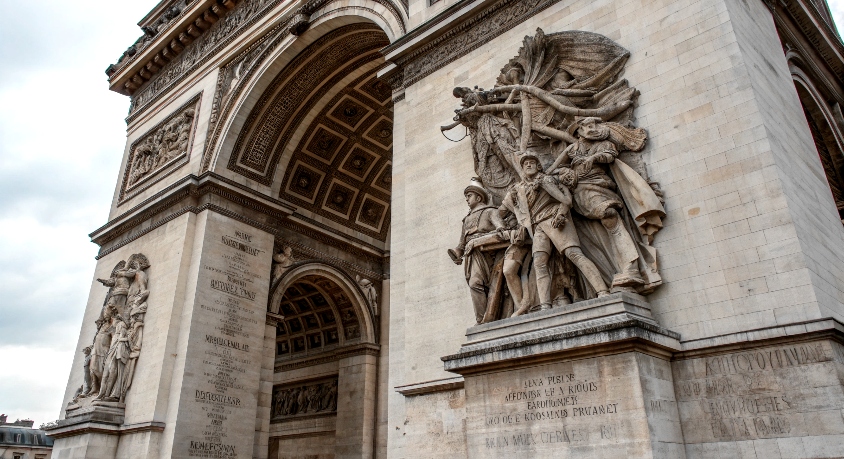
The Arc de Triomphe is a fine example of Neoclassical architecture, which combines elements of classical Greek and Roman styles with modern touches. The structure has a single large arch in the center, flanked by smaller arches on either side. The arch is supported by four massive pillars, each adorned with intricate sculptures and reliefs. The outer surface of the monument is decorated with various sculptures that depict scenes of war, victory, and peace.
One of the most famous reliefs on the monument is the "Marseillaise" relief, which can be found on the left side of the main façade. This powerful image represents the French national anthem and is a symbol of the French Revolution. Other important reliefs include representations of military victories, including battles from the Napoleonic Wars. The names of the generals who fought alongside Napoleon are also engraved on the walls of the monument, paying tribute to their bravery and leadership.
The Arc de Triomphe was designed with a strong emphasis on grandiosity, representing the triumphs of the French people. The monument’s simple yet majestic design, with its clean lines and large arches, speaks to the importance of military power, national pride, and the glory of the French army.
---
The Arc de Triomphe’s outer walls feature several large reliefs that commemorate important moments in France’s military history. On the left side of the arch, the "Marseillaise" relief shows a group of soldiers and allegorical figures preparing for war. The figures are shown in dynamic poses, symbolizing the spirit of the revolution and the nation’s fight for freedom and independence.
On the right side of the arch, the reliefs depict scenes of victory. These sculptures show the military triumphs of France’s army, as well as images of soldiers and leaders in battle. On the arch’s walls, there are also four groups of reliefs that represent the themes of "Departure," "Victory," "Peace," and "Resistance," all of which are related to war and its consequences.
Above the main arch, the names of major battles in French history are carved, including the Napoleonic Wars and the French Revolutionary Wars. These names serve as a reminder of the sacrifices made by French soldiers and the importance of victory in shaping the nation’s future.
The Arc de Triomphe is much more than just a monument. It is a symbol of France’s strength, resilience, and pride. Over the years, it has come to represent not only military victories but also the unity and determination of the French people. The monument stands as a testament to the country’s ability to overcome challenges and emerge stronger in times of hardship.
In addition to its historical significance, the Arc de Triomphe also holds deep emotional meaning for the French people. It serves as a symbol of the country’s continued commitment to freedom, justice, and national pride. For many French citizens, the arch is a reminder of the struggles of the past and the enduring spirit of the nation.
The Arc de Triomphe is the site of several important national events and commemorations throughout the year. One of the most notable is the annual Bastille Day celebration on July 14, which marks the French Revolution. The day begins with a grand military parade along the Champs-Élysées, with the Arc de Triomphe serving as the starting point for the procession. This event is a time for the French people to come together and celebrate their nation’s history, independence, and pride.
---
Another significant event held at the Arc de Triomphe is the annual Armistice Day ceremony on November 11. This event marks the end of World War I and honors the fallen soldiers who died during the war. The President of France, along with other high-ranking officials, gathers at the monument to pay their respects and lay a wreath at the Tomb of the Unknown Soldier. The ceremony is a solemn occasion, reminding the nation of the sacrifices made during the war and the importance of peace.
The Arc de Triomphe is also the site of various other national and international events, including commemorations of major military victories and celebrations of French culture and heritage.
One of the most significant features of the Arc de Triomphe is the Tomb of the Unknown Soldier, located beneath the arch. This tomb serves as a tribute to the soldiers who died in both World War I and World War II but whose remains were never identified. The tomb is marked by an eternal flame, which is rekindled every evening in a ceremony attended by officials and members of the public.
The Tomb of the Unknown Soldier is an important part of the Arc de Triomphe and holds a special place in the hearts of the French people. It is a symbol of the nation’s gratitude and respect for those who gave their lives for the country. Visitors to the Arc de Triomphe often take a moment to reflect on the sacrifices made by these brave soldiers.
---
The Arc de Triomphe is one of the most popular tourist attractions in Paris. Visitors come from all over the world to admire its grandeur and learn about its rich history. The monument can be visited year-round, and visitors can climb to the top for stunning views of the city. From the top of the arch, you can see a panoramic view of Paris, including landmarks such as the Eiffel Tower, the Louvre, and the Sacré-Cœur Basilica.
The Arc de Triomphe is not just a monument to France’s past, but also a living symbol of the nation’s enduring spirit and pride. Whether you are a history lover, a fan of architecture, or simply someone who appreciates beautiful landmarks, the Arc de Triomphe is a must-see destination for anyone visiting Paris.