 Search
- # affordable Japan travel
- Stop Wasting Thousands On Overrated Kyoto Shrines When This Budget Paradise Exists Nearby
- Jun,25,2026
The steam from my ten-dollar bowl of fatty tuna ramen fogged up my glasses as I sat in a cramped, wooden stall tucked away in a side alley of Uji. Outside, a light drizzle tapped against the paper screens, and for the first time in three days, I couldn't hear a single megaphone-wielding tour guide or the aggressive clicking of professional cameras. I had just fled the chaotic swarms of Kyoto, where people were literally elbowing each other to get a photo of a single orange gate. Here, the only sound was the rhythmic whisking of matcha from the shop across the street. It was the kind of quiet that feels expensive, yet my train ticket from the city center cost less than a fancy latte at home. Most travelers treat this region like a theme park, paying "tourist taxes" hidden in plain sight, but I realized quickly that the real Japan starts exactly where the subway lines get a little thinner and the English signs get a little smaller.
Walking along the Uji River feels like a slap in the face to anyone who just spent three hours queuing for a blurry photo at Fushimi Inari. While the masses are sweating through their rented kimonos in Gion, I found myself crossing the Asagiri Bridge with nothing but the scent of toasted tea leaves and the cool breeze hitting my face. The riverbank is dotted with locals walking their Shiba Inus, not influencers trying to find the "perfect" angle for a sponsored post. I stumbled upon a small stone path leading toward the Kosho-ji Temple. There was no entry fee to walk the Tunnel of Koto, a slope lined with lush greenery that turns into a fiery tunnel of maple leaves later in the year. I spent forty minutes sitting on a mossy stone wall, watching a crane fish in the shallows, and it cost me exactly zero yen. In Kyoto, a "peaceful zen garden" usually comes with a fifteen-dollar ticket and a soundtrack of a hundred shuffling feet.
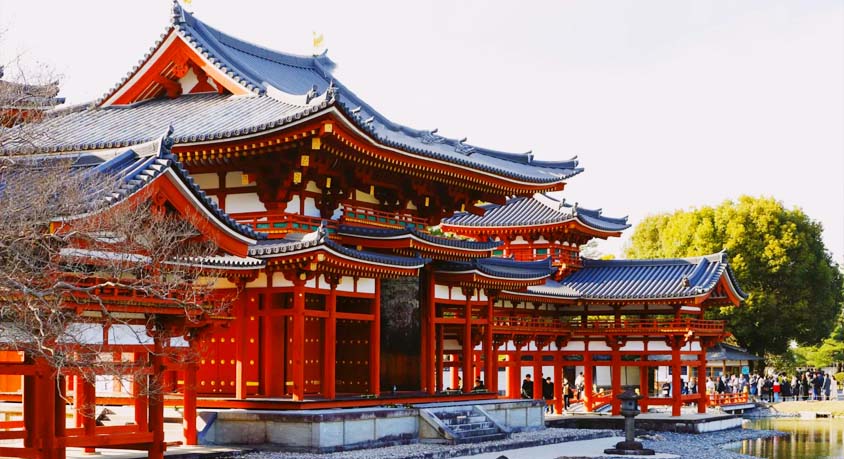
Let’s talk about the financial delusion most people suffer from when they land in Japan. They think they need to book those "exclusive" tea ceremonies in the heart of the city that run for eighty dollars a person. It’s a scam wrapped in a silk ribbon. I walked into a centuries-old tea house near the Uji bridge where a grandmotherly woman served me authentic, frothy matcha and a handmade wagashi sweet for about seven dollars. We didn't need a translator; her pride in the bright green liquid was evident in the way she rotated the bowl. If you’re paying more than ten dollars for tea in this country, you’re not paying for the leaves; you’re paying for the landlord’s rent in a high-traffic district. My entire lunch—a massive tray of green tea buckwheat noodles and crispy tempura—was under fifteen dollars. Compare that to the "tourist set meals" in downtown Kyoto that start at forty dollars and taste like cardboard, and you’ll realize why my wallet was actually feeling heavier by the end of the day.
While everyone screams about the Golden Pavilion, I spent my afternoon at the Mimuroto-ji Temple. It’s a bit of a hike, which effectively acts as a natural filter for the lazy crowds. I call it the "effort-to-beauty ratio." If it takes a twenty-minute uphill walk, 90% of the tour buses won't go there. The temple grounds are famous for hydrangeas and lotuses, but the real secret is the eccentric statues scattered around. I found myself rubbing the tail of a stone ox for good luck, chatting with a local student who told me that coming here in the "off-season" of early April is actually better than the peak cherry blossom craze. You avoid the "Sakura markup" on hotels—which can jump by 300%—and you actually get to see the architecture without a sea of selfie sticks blocking the view. The air was crisp, requiring a light jacket I’d picked up at a local thrift shop, proving that "seasonal" travel is often just a marketing term to justify hiking up prices.
One of the most jarring contrasts is the shopping experience. In the main districts, "craft" shops sell mass-produced magnets for ten dollars. In the backstreets of Uji, I found a small woodshop where a man was carving tea scoops by hand. We talked for a bit about the humidity levels and how they affect the wood. He sold me a piece that felt like a work of art for the price of a McDonald's meal. This is the "hidden cost" of convenience; if you buy it where everyone else buys it, you’re getting the lowest common denominator. I’ve realized that the best travel strategy isn't about finding the cheapest hostel, it's about shifting your spending from "visibility" to "value." I'd rather spend fifty dollars on a local train pass that takes me to five different small towns than fifty dollars on one mediocre dinner overlooking a crowded canal.
As the sun began to dip, casting long, golden shadows over the Uji River, I realized that the "must-see" lists are usually written by people who never left the main road. The true magic of the region isn't in the gold-leafed buildings or the famous landmarks; it’s in the quiet realization that you’ve found a loophole in the system. You can have the traditional gardens, the ancient history, and the world-class food without the soul-crushing crowds or the predatory pricing. You just have to be willing to get off the train three stops earlier than everyone else. Travel shouldn't be a checklist of expensive chores; it should be a series of moments where you feel like you’ve stolen a bit of the world for yourself.