 Search
- # CERN Science Gateway
- Exploring the CERN Science Gateway: A Fascinating Journey into the World of Particle Physics
- May,28,2025
During my recent trip to Geneva, Switzerland, one of the most exciting and mind-expanding attractions I had the chance to visit was the CERN Science Gateway. Nestled at the heart of the world's largest particle physics laboratory, CERN (the European Organization for Nuclear Research), the Science Gateway offers a captivating experience that brings the wonders of particle physics and scientific discovery to life. Whether you’re a science enthusiast or simply someone curious about the mysteries of the universe, CERN is an unforgettable stop on any Geneva itinerary. Here's a detailed guide to my visit, highlighting the unique aspects of the Science Gateway and some essential tips for your own journey.
CERN’s Science Gateway is an extraordinary fusion of science, technology, and creativity. Opened as part of CERN’s mission to engage the public with scientific research, this modern complex is designed to showcase the groundbreaking work conducted at CERN and make the complex world of particle physics accessible to everyone. I was immediately struck by the futuristic architecture of the building, which combines sleek, modern designs with interactive, hands-on exhibits that make the world of science both educational and fun.
As I entered the Science Gateway, I was welcomed by a bright, open space that exuded an atmosphere of discovery. The entrance to the facility itself sets the tone for what lies ahead—a journey into the heart of the universe, where the fundamental building blocks of matter are studied and understood.
One of the things I appreciated most about the Science Gateway was how interactive and engaging the exhibits were. Rather than just being a typical museum with static displays, the Science Gateway is designed to actively involve visitors in the learning process. Several areas of the exhibit use cutting-edge technology to allow you to experiment, simulate, and explore the world of physics in a hands-on way.
One highlight for me was the “Exploring the Universe” section, where I got to virtually experience how particle accelerators work. I stood in front of interactive screens and simulated the journey of particles being accelerated to near light speed, while also learning about the various experiments CERN scientists conduct to study the tiniest particles in the universe. This was a great way to visualize concepts that are otherwise difficult to comprehend, especially for someone like me, who doesn't have a background in physics.
Another fascinating exhibit was the “Large Hadron Collider (LHC) Virtual Tour”, where I got to learn about the world's most powerful particle accelerator—the LHC—without physically being inside the underground facility. Through a combination of augmented reality and video footage, I was able to see the massive scale of the LHC, which stretches across a 17-mile ring beneath the ground. The exhibit beautifully explained the cutting-edge research that has led to monumental discoveries such as the Higgs boson.
---
The “Discovering Matter” section was also a standout. It focused on the fundamental particles that make up everything in the universe. Here, I had the chance to interact with models that demonstrated how these particles interact with each other and form atoms, which in turn form all the matter we experience in our daily lives.
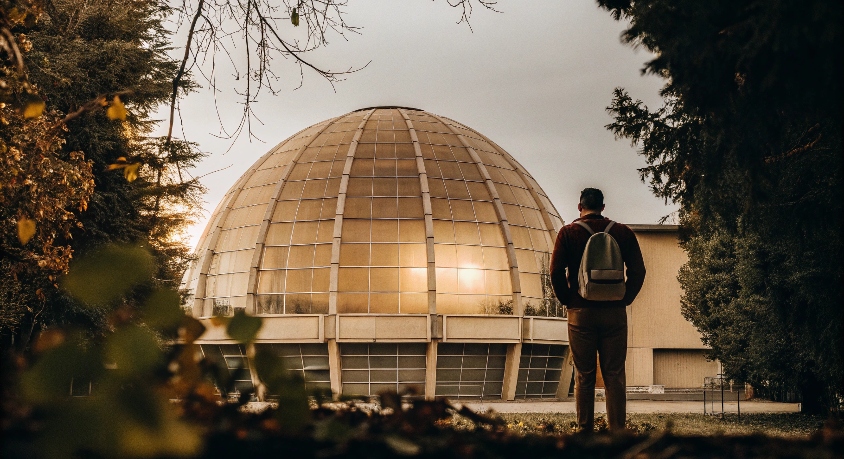
One of the most striking features of the Science Gateway is the Globe of Science and Innovation, an iconic spherical building that stands out both inside and outside the CERN campus. The globe is a visual symbol of CERN’s commitment to global collaboration and innovation in science. Inside the globe, I found even more interactive displays and exhibitions focused on topics such as quantum mechanics, dark matter, and the history of CERN's discoveries.
The Globe offers a serene yet stimulating environment for reflection and learning. I spent some time here immersing myself in multimedia presentations that described the collaboration between scientists from all over the world and how CERN plays a crucial role in advancing global knowledge of the universe’s fundamental laws.
For those interested in diving deeper into the science, the CERN Science Gateway offers virtual reality (VR) and augmented reality (AR) experiences that allow you to explore CERN’s experiments and research in a new way. I tried the VR experience that simulates what it's like to be inside the LHC. The level of detail was incredible, and I was transported into a 360-degree simulation where I could watch particles zooming through the collider, interacting in ways that are impossible to see with the naked eye. This immersive experience is truly unique and gave me a deeper understanding of the research happening at CERN.
CERN’s mission is not just about conducting scientific research; it’s also about making science accessible to people of all ages and backgrounds. The Science Gateway plays a big role in achieving this goal through a variety of educational and cultural programs. During my visit, I discovered that CERN regularly hosts lectures, workshops, and special events aimed at making science fun and engaging for everyone. Whether you’re a student, teacher, or simply a curious traveler, there are opportunities to take part in discussions, experiments, and educational programs that bring the science to life in practical ways.
If you're visiting with children, there are special programs designed to spark their curiosity. The museum’s engaging displays and interactive activities are perfect for young minds, making science both fun and educational for families.

Plan Ahead for Your Visit
CERN’s Science Gateway can get quite busy, especially during peak tourist seasons, so I recommend planning your visit ahead of time. Check their website for opening hours, special events, and ticket information. Tickets are usually free, but there are some special tours and activities that may require a booking.
Take a Guided Tour
If you’re really interested in understanding the science behind CERN’s experiments, consider joining one of their guided tours. These tours are led by knowledgeable staff members who provide a wealth of information about CERN’s research and the exhibits in the Science Gateway. I joined a guided tour during my visit, and it made a huge difference in my understanding of the complex scientific concepts on display.
Allow Time to Explore
The Science Gateway has a lot to offer, so allow at least a couple of hours to explore the exhibits, interact with the displays, and perhaps try out some of the VR and AR experiences. If you have a keen interest in science, you could easily spend an entire day here!
---
Check for Special Events
CERN often hosts special events, temporary exhibits, and educational programs, so it’s a good idea to check their calendar before your visit. These events can give you deeper insight into specific areas of particle physics and the ongoing research at CERN.
Respect the Guidelines
As with any scientific facility, there are rules in place to ensure the safety and well-being of visitors. Follow all guidelines and respect the interactive displays. Photography is generally allowed in most areas, but check for any signs that may indicate restrictions in certain exhibits.
My visit to the CERN Science Gateway was an unforgettable experience. It offered a perfect blend of education, entertainment, and scientific exploration, making complex topics accessible and engaging for everyone. Whether you’re a science enthusiast or simply curious about the universe, the Science Gateway is a must-see attraction in Geneva. It’s a place where curiosity is celebrated, and where visitors can step into the world of cutting-edge scientific research and discovery. I highly recommend taking the time to visit and dive into the wonders of the universe!