 Search
- # Arch of Constantine
- The Triumphal Arch of Constantine: A Glorious Testament of Rome
- Jul,23,2025
The Arch of Constantine is an ancient triumphal arch in the center of Rome, located between the Colosseum and the Palatine Hill. It was built between 312 and 315 AD to commemorate Constantine the Great's victory over Maxentius in the Battle of the Milvian Bridge. This triumphal arch is one of the largest and best-preserved triumphal arches in Rome and an outstanding representative of ancient Roman architectural art.
The Arch of Constantine is known for its impressive structure and innovative design. It is 21 meters high and 25.7 meters wide, made of bricks and concrete, and decorated with rich reliefs depicting Constantine the Great's victory scenes and military exploits. The arch shows a combination of different architectural styles, drawing on earlier monuments, which is a hallmark of Roman architectural practice known as spolia.
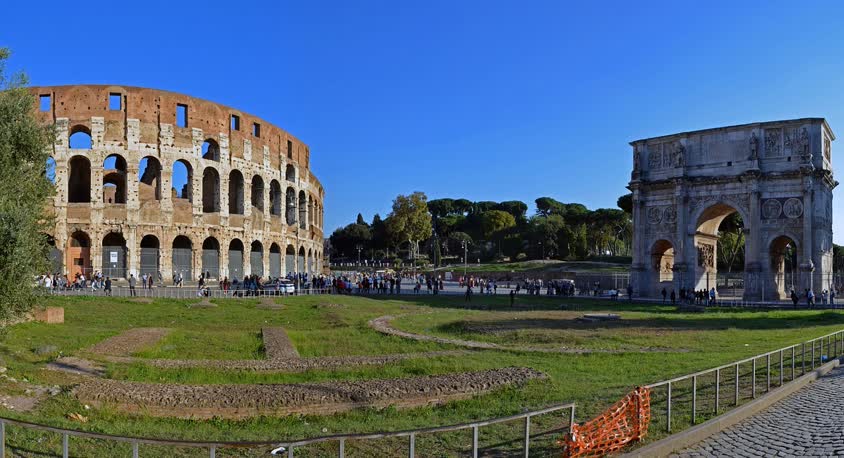
Some of the reliefs were disassembled from earlier buildings and reassembled on the triumphal arch, reflecting the inheritance and innovation of ancient Roman art; at the same time, the reuse of materials from earlier emperors such as Trajan, Hadrian and Marcus Aurelius created a dialogue between the old and the new, integrating elements from various periods of Roman architecture.
The arch has three openings, and the central arch is larger than the arches on both sides. Its front is decorated with symbols of war, victory, and peace and authority. Notable reliefs include scenes from the battles of Trajan and Hadrian, perfectly interwoven with detailed figures that convey a sense of movement and grandeur. The reliefs have a dual purpose: they celebrate Constantine's victory while also praising Rome's military tradition.
The inscription on top of the arch reads “To the Emperor Constantine, for his great courage and military force, under divine inspiration, liberated the city of Rome”, while also emphasizing Constantine’s role as the unifier of the empire and champion of the people. This magnificent building represents not only a celebration of victory but also a declaration of political power, which has lasted for a long time.
---
The Arch of Constantine is more than just a historical monument. It marks a profound shift in Roman history, heralding the empire’s transition to Christianity. Constantine’s victory at the Milvian Bridge was seen as divine approval, which led to his decision to promote religious tolerance throughout the empire. The arch thus symbolized not only military victory but also the dawn of a new era, when Christianity would eventually become the state religion.
This surviving building is a testament to the architectural ingenuity and artistic creativity of ancient Rome. Its prominent position in the Roman landscape has made it an important reference for historians, later architects, and artists. In addition, the arch has inspired countless buildings around the world, demonstrating the lasting legacy of Roman architecture.
After exploring the grandeur of the Arch of Constantine, visitors can indulge in the rich culinary landscape surrounding it. The nearby areas, particularly the bustling Trastevere district, are home to numerous trattorias and pizzerias that offer authentic Roman cuisine. Guests can enjoy a variety of traditional dishes, from classic pasta like Cacio e Pepe to delectable Roman-style pizza with thin, crispy crusts. Strolling the vibrant streets, one can also find gelato shops serving up refreshing flavors and local delicacies, making it an excellent opportunity to experience the true essence of Italian flavors.
Timing Your Visit: To avoid the crowds, it is recommended to visit the Arch of Constantine in the early morning or late afternoon. This timing not only enhances the experience but also offers better opportunities for photos without the disturbance of large groups.
Accessibility: The area is easily accessible to both pedestrians and individuals with limited mobility, making it a convenient stop while exploring the Roman Forum and the Colosseum nearby.
---
Stay Hydrated: Rome can be quite warm, especially in summer. Carrying water is advisable while walking around the archaeological areas, with public drinking fountains readily available.
Respect the Site: When exploring historical sites like the Arch of Constantine, practice sensitivity by not climbing on the monument or touching the delicate features to help preserve its integrity for future generations.
The Arch of Constantine stands as a powerful emblem of Roman victory and a cornerstone of architectural brilliance. Its blend of history and artistry provides a unique insight into the character of ancient Rome, making it a must-visit site for anyone wishing to delve deeper into the grandeur of this extraordinary civilization. I hope the above information can help you better visit the Arch of Constantine, and I wish you a happy journey!